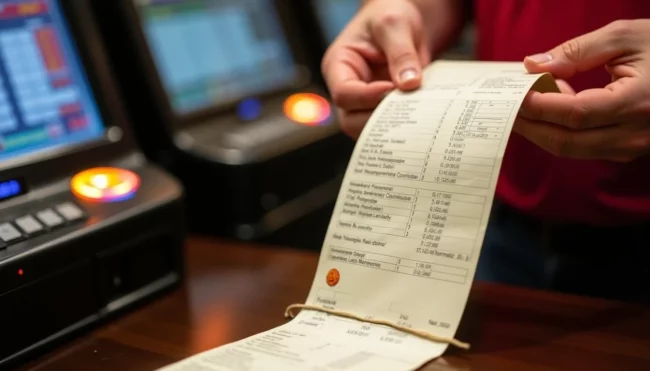
The cashier at Caesars Sportsbook in Lake Charles, Louisiana, printed a ticket so long it needed its own rubber band. Jim McIngvale, the Houston furniture man everyone calls Mattress Mack, had just parked $9.5 million on the Cincinnati Bengals moneyline at +170 for Super Bowl LVI. The ticket represented roughly 950 times the median American household income, committed to one football game, one outcome, one night in February 2022. The Bengals lost 23-20. Mack walked out with a souvenir worth nothing.
The Bets That Actually Happened
This story starts by separating documented wagers from barroom fiction. The gambling world runs on whispered legends: the guy who bet everything on Buster Douglas, the fortune left on a single horse, the anonymous whale who broke a book in Macau. These tales share common DNA. They lack bet slips, named sources, sportsbook confirmations, or regulatory footprints. Instead, they offer narrative satisfaction, the dream of one perfect call changing everything.
Mattress Mack’s bets carry the opposite signature. His $9.5 million Bengals wager, the largest confirmed single sports bet in American history, came with press releases from Caesars, television cameras, and a clear commercial purpose. McIngvale runs Gallery Furniture, where he periodically promises customers free mattresses or living room sets if a local team wins a championship. The sportsbook bet hedges that promotion. He wins the bet, covers the furniture, and pockets the difference. He loses the bet and writes it off as marketing spend. The gambling loss stings less because it was never really gambling in the first place.
His 2022 World Series play on the Houston Astros operated on identical mechanics. McIngvale spread $4.5 million across multiple books including Caesars and BetMGM at +180 odds. When the Astros defeated the Phillies, his total haul exceeded $75 million, a record payout in legal American sports betting. The number made headlines, but the structure remained invisible to most coverage. McIngvale wasn’t risking his children’s inheritance. He was executing a futures contract against his own advertising budget.
Other confirmed heavy bets carry different fingerprints. An anonymous bettor placed $4.9 million on the Philadelphia Eagles moneyline at +180 for Super Bowl LII in February 2018. The Eagles beat the Patriots 41-33. The payout approached $13.7 million total. No name ever surfaced, no promotional angle emerged. Someone simply believed, committed, and collected.
Floyd Mayweather Jr. operates in a separate category entirely. His reported $1.1 million on the Denver Broncos -8.5 against the New York Jets in 2014 came with his usual performance: social media posts, cash stacks, the full Money Mayweather production. The Broncos won 31-17, covering comfortably. The $1 million profit landed in the pocket of a man who made nine figures for walking into boxing rings. For Mayweather, the bet was brand maintenance, another way to remind the world that his relationship with money differs from everyone else’s.
The Math That Separates Fantasy From Reality
The romantic image of a million-dollar bet involves life-altering returns, the kind of money that rewrites futures. The actual mathematics often disappoints. McIngvale’s $9.5 million Bengals wager, had it won at +170, would have returned $16.15 million in profit. Impressive, but a 170 percent return on capital that was never truly at risk in the traditional sense. His Astros bet at +180 offered better economics, yet still required a $4.5 million outlay to generate $8.1 million in profit on that specific ticket.
The anonymous Eagles bettor faced better odds at +180, but even that $8.82 million profit on a $4.9 million stake represents a specific risk-reward profile. These are not lottery tickets. They are concentrated investments with binary outcomes, and the juice ensures the house maintains its edge regardless of who holds the ticket.
Mayweather’s Broncos play illustrated the favorite’s dilemma. Laying $1.1 million to win $1 million at roughly -110 odds meant accepting near-even money on a proposition that required Denver to win by more than a touchdown. The bet worked, but the return profile matched what a competent bond trader might expect over a year, compressed into three hours of football.
What the Losers Leave Behind
McIngvale’s $2.6 million on Essential Quality to win the 2021 Kentucky Derby at 2-1 odds finished fourth. The $5.2 million profit that would have accompanied a victory evaporated at the top of the stretch. For a pure gambler, that loss represents catastrophe. For McIngvale, it folded into another quarter’s marketing budget. This distinction explains who can actually play at these limits.
The sportsbooks accepting these wagers face their own calculus. A $75 million payout to one customer creates genuine strain, even for operations the size of Caesars or BetMGM. Books manage this exposure by laying off portions to competitors, adjusting lines to attract balancing action, or simply accepting the volatility as a cost of generating headlines. The publicity value of paying Mattress Mack his millions exceeds the cost of equivalent advertising. Every major payout becomes a recruitment tool for other whales, proof that the book can handle extreme action.
Why the Myths Outrun the Truth
The unconfirmed stories persist because they serve needs that verified wagers cannot. The documented bets belong to businessmen with hedging strategies, celebrities with image consultants, anonymous wealthy individuals whose motivations remain opaque. They are interesting without being universal.
The myths offer something cleaner: the factory worker who bet his life savings on a longshot and won; the desperate man who risked everything on one roll and lost. These narratives require no paperwork, permit no fact-checking, and adapt to whatever moral the storyteller needs. They persist because gambling culture needs its folklore, the sense that anyone, anywhere, might make the call that changes everything.
The reality is more prosaic and more brutal. The largest confirmed bets in American history were placed by people who could afford to lose, often with structures that minimized genuine personal risk. The fantasy of the all-or-nothing wager, the single moment that makes or destroys a life, remains largely that. The cashier prints the ticket. The rubber band wraps it tight. Most of the time, the house still holds.